Leadership Development · 2 October 2026 · 5 min read
Designing an Executive Leadership Development Programme That Holds
Design an executive leadership development programme around strategic decisions, candid practice and sponsor accountability, with transfer built into work.
Written by Sarah Murray
Photograph: Immersive Leaders programme photography — all rights reserved by Immersive Leaders by ISSET
Senior leaders can discuss strategy fluently and still struggle to make shared trade-offs when their own functions are affected. Another programme built around polished presentations will not necessarily change what happens when resources, reputation or authority are at stake.
Executive development needs to work with those tensions rather than stepping around them. The design question is which consequential leadership work the participants must become better able to do together.
Design around a strategic tension, not a topic list
Start with a live tension that requires executive judgement. This might be balancing short-term delivery with investment, integrating functions after a restructure, or deciding where local autonomy should end. Avoid turning the programme into a substitute strategy process, but give it a genuine connection to strategic work.
Interview sponsors and prospective participants separately. Differences in their accounts are useful design evidence. A sponsor may describe slow decisions while executives describe decisions repeatedly reopened by the sponsor. Teaching decisiveness alone would miss the problem.
Translate the tension into observable actions. Leaders might need to make assumptions explicit, surface conflicting interests earlier, or agree which decisions can be delegated. These actions provide a stronger design foundation than a broad ambition to develop strategic mindsets.
Secure sponsorship that survives discomfort
Executive learning can expose inconsistencies in how authority works. A sponsor who supports challenge in principle may become less enthusiastic when the challenge concerns their own decisions. Discuss that possibility before the programme begins.
Agree what sponsors will do, not just what they will say at the opening. They may need to protect participation time, respond to unresolved governance questions and model the behaviours being developed. Their involvement should be visible without making every session feel like an assessment.
- Establish which organisational issues the programme can influence.
- Decide how concerns about senior behaviour will be raised safely.
- Clarify what remains confidential and what will be reported to sponsors.
These boundaries should be explained to participants directly. Vague assurances about confidentiality become particularly unhelpful when sensitive organisational information enters the room. Facilitators need a clear route for handling issues that cannot appropriately stay within the group.
Use challenge that reveals actual choices
Executives are often skilled at giving the answer expected in a classroom. Design tasks that require trade-offs, incomplete information and interdependence, rather than asking participants to describe ideal leadership in general terms.
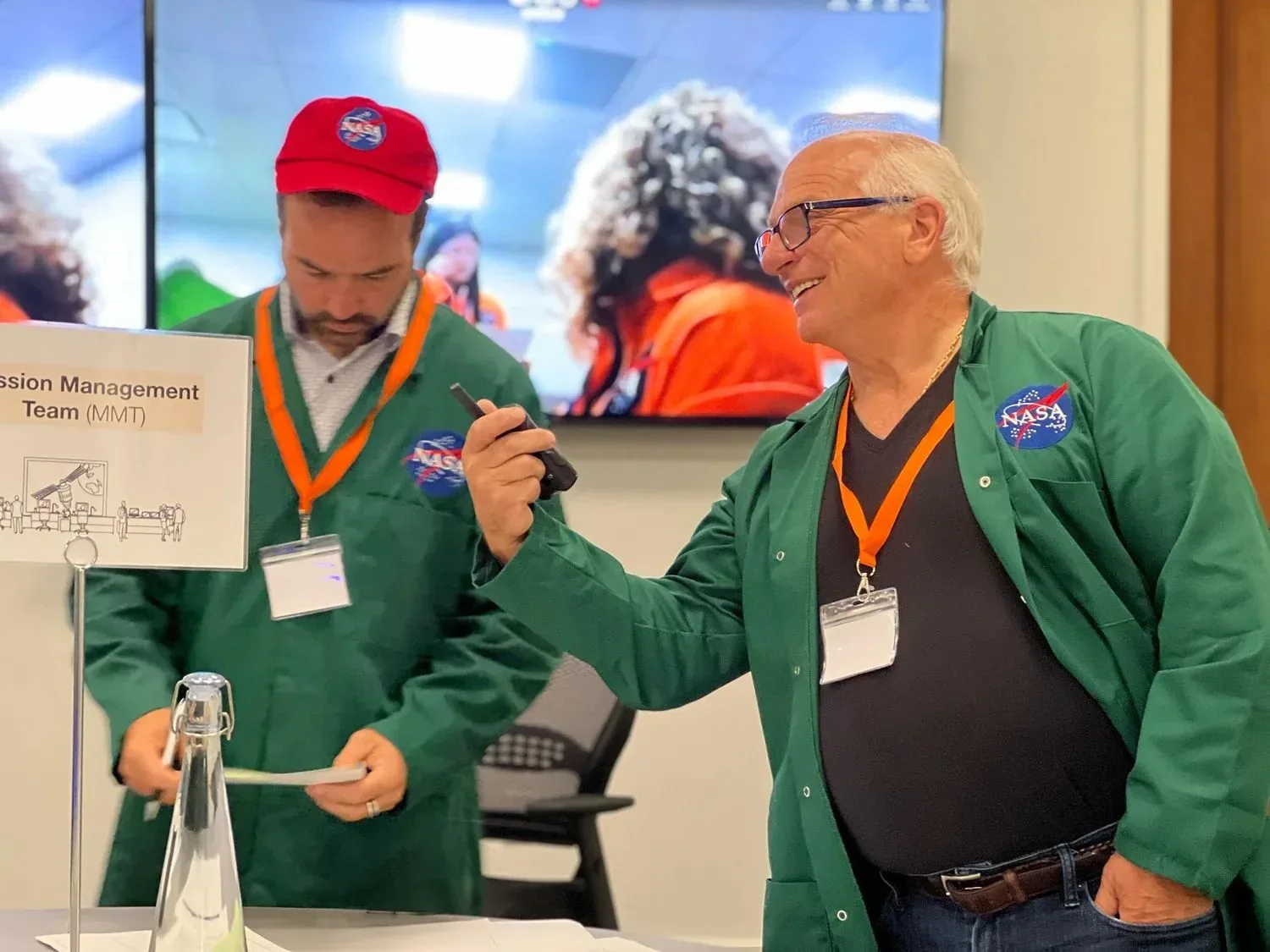
A realistic case or simulation can make patterns visible without turning a live commercial decision into an experiment. Participants might need to prioritise competing objectives, decide when to escalate or communicate uncertainty across roles. Difficulty should serve the learning objective, not provide spectacle.
Observation matters as much as the task. Capture who seeks information, how dissent is handled and whether responsibility is genuinely shared. Avoid inferring personality traits from a single pressured episode; behaviour in an exercise is evidence to explore, not a definitive diagnosis.
The debrief should connect the choices made to recognisable executive work. Ask where the same pattern appears, what sustains it and what a more useful response would look like next time.
Build a sequence that includes workplace experiments
A development programme needs a rhythm that allows reflection and application. An intensive session can establish common language, but workplace assignments test whether that language changes decisions under normal organisational pressures.
Choose assignments with meaningful consequences and manageable risk. An executive might redesign the handover between functions, change the preparation for an investment discussion or test a clearer delegation agreement. Avoid vague commitments to listen more or collaborate better.
Bring evidence from those attempts into subsequent sessions. A stalled experiment may reveal conflicting incentives or unclear authority that the initial design missed. Treat it as useful information rather than an embarrassing deviation from the programme plan.
Leave space for emerging needs without abandoning the original purpose. Flexibility should sharpen the programme's relevance, not let every current organisational concern consume the learning time.
Match faculty to the level of scrutiny
Senior participants will test both the content and the facilitator's judgement. Credibility comes from understanding their operating context, handling disagreement and challenging unsupported claims, not from collecting impressive biographies.
Ask who will actually deliver the programme and how they prepare. A compelling proposal is little comfort if the delivery team cannot distinguish a productive disagreement from a conversation that has become unsafe or politically loaded.
- Request an example of how the facilitator handles executive defensiveness.
- Examine how feedback will be grounded in observed behaviour.
- Check the arrangements for coaching, confidentiality and escalation.
Where external specialists contribute, connect their material to the programme's core problem. A memorable guest session can stimulate reflection, but it should not become an isolated performance whose relevance participants must invent afterwards.
Evaluate collective work, not just individual impressions
Executive development often aims to improve how a leadership group operates. Evaluate that collective work alongside individual learning. Look at the quality of decision preparation, the clarity of accountabilities and whether unresolved disagreements are addressed before implementation.
Agree evidence sources at the outset. Meeting observations, decision records and feedback from direct reports may reveal useful changes, provided privacy and purpose are clear. Do not assume that a more agreeable atmosphere means better decisions; healthy challenge may initially make meetings feel less comfortable.
Review the organisational conditions as well. If executives have changed their behaviour but governance still rewards functional protection, the next intervention may belong in the operating model rather than another workshop.
A programme holds when its learning is supported by the way executive work is organised. The lasting evidence sits in decisions, conversations and follow-through, not in how convincingly participants describe their experience at the closing session.
Bring this to your team
We run NASA-style simulations, astronaut keynotes and leadership expeditions for organisations that need their leaders to make good calls under pressure.
Book a Call