Leadership Development · 9 November 2026 · 6 min read
Planning a Leadership Training Budget That Survives Scrutiny
Make leadership training budget planning defensible with clear outcomes, full delivery costs and evidence that helps finance judge the investment fairly.
Written by Christopher Barber

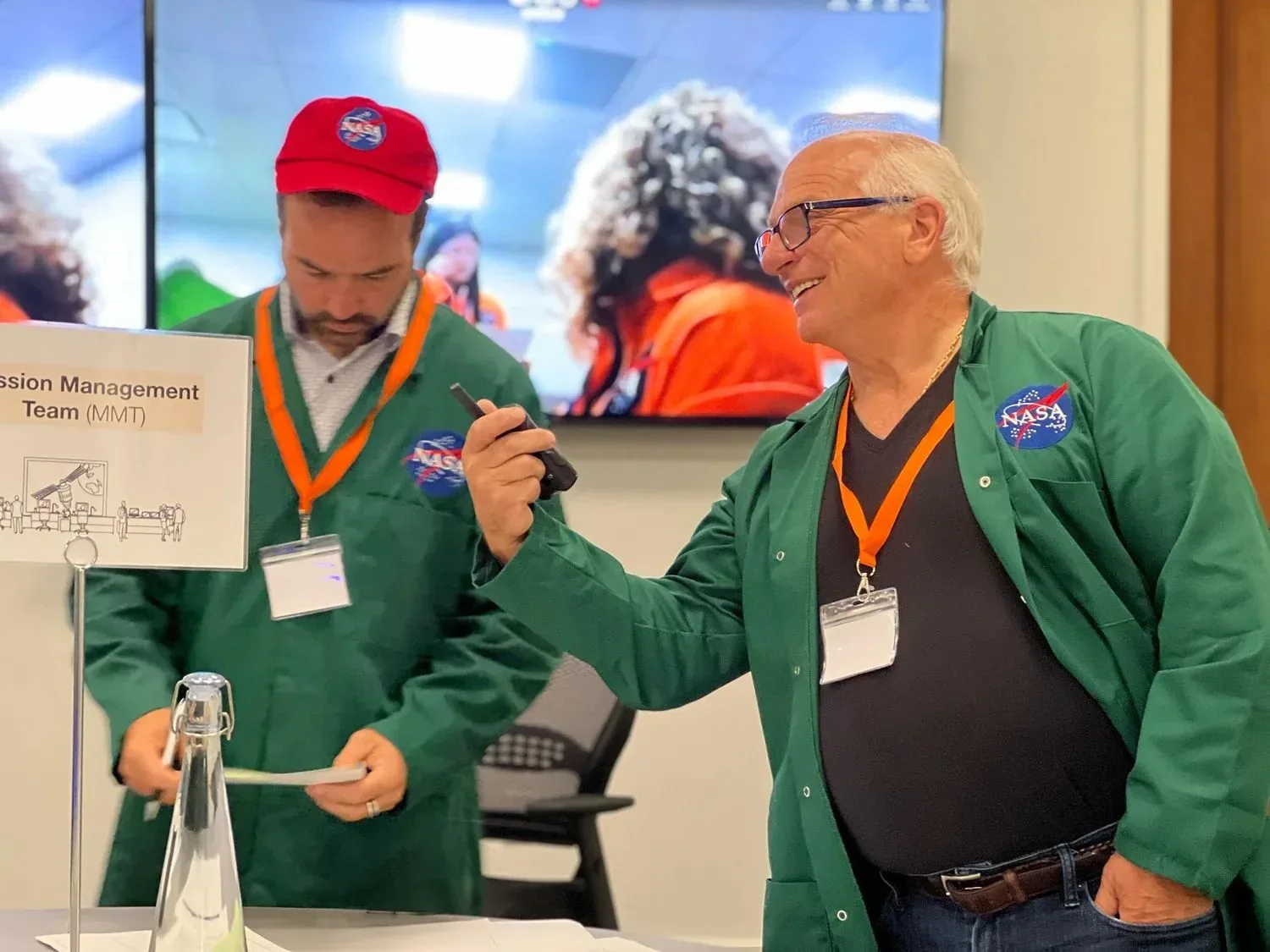
Photograph: Immersive Leaders programme photography — all rights reserved by Immersive Leaders by ISSET
Your leadership budget is being challenged, and a list of workshops will not defend it. Finance wants to know what will change, operational leaders want their managers back at work, and you need a proposal that acknowledges both concerns. Start with the actual work that is going wrong, not the course you would like to buy.
Budget for a problem someone owns
Choose a management problem with a named operational owner. Slow escalation, inconsistent delegation and repeated conflict across functions are useful starting points because people can describe their consequences. Low confidence is harder to budget against unless you can explain what that uncertainty prevents managers from doing. Ask the sponsor for an example from recent work, including the decision, delay or avoidable intervention involved.
Write the intended change in observable language. Managers should agree decision boundaries before handing over work, for example, rather than become more empowering. This does not promise that training will resolve every operational weakness. It gives the budget a purpose that can be tested, and exposes dependencies such as unclear authority or incompatible performance targets before money is committed.
Make the whole commitment visible
The supplier fee is not the whole budget. Include preparation, participant time, accessibility adjustments, travel where relevant, facilitation and follow-through. Internal delivery also consumes capacity. Calling that capacity free simply moves the cost somewhere less visible. Discuss how attendance will be covered so that colleagues are not left carrying an unplanned workload while managers learn about delegation.
Separate essential costs from choices about format. A residential setting may support concentrated work, but it needs a reason beyond being away from the office. The same applies to specialist speakers and elaborate materials. Protect the elements that connect learning to live management decisions before defending the decorative parts.
- Show delivery costs separately from participant time and operational cover.
- Identify preparation and accessibility requirements before contracting.
- Reserve capacity for practice, feedback and evaluation after the event.
Compare options against the same job
A short workshop, a coaching arrangement and an extended programme are not interchangeable purchases. Compare them against the behaviour you need, the readiness of the group and the support available at work. A lower headline commitment may offer less practice or require much more internal facilitation. A larger programme may include elements your managers do not need.
Ask each supplier to explain its assumptions about preparation, group size, adaptation and follow-up. Request a clear account of what the client must provide. Otherwise one proposal may include diagnostic work while another quietly assumes that your team has already done it. Make those differences explicit before procurement starts treating unlike offers as equivalent. The comparison should reveal trade-offs, not manufacture a winner through a spreadsheet that hides them.
Agree evidence before promising returns
Do not convert every improvement into a financial return. Some benefits are measurable without being credibly monetisable. Better escalation can be assessed through case reviews, manager observation and fewer decisions returning for clarification. Any financial interpretation still needs a defensible connection to the training rather than a convenient coincidence in business results.
Establish what is happening now, who can observe change and when a review would be meaningful. Record other changes that could affect the same outcome, such as a new operating model or revised targets. Finance is more likely to trust an honest account of contribution than a confident calculation built on assumptions nobody has examined. Agree in advance what inconclusive evidence would look like as well as what would support further investment.
Defend transfer before defending theatre
When the budget is reduced, protect the opportunity to practise at work and receive feedback. Removing every follow-up conversation while retaining an impressive launch is a reliable way to fund an event instead of development. Ask participants' managers to identify suitable work assignments and make room to discuss what happened afterwards. That commitment belongs in the proposal, not in a hopeful closing slide.
A staged decision can make sense where the audience or approach is uncertain. Define what an initial group should help you learn before expanding delivery. Do not call every small start a pilot if there is no decision attached to the findings.
- What evidence would justify continuing, adapting or stopping delivery?
- Which operational manager owns opportunities to practise the behaviour?
- What support remains if the preferred format becomes unaffordable?
Present a decision rather than a wish list
Bring the sponsor a preferred option, its dependencies and a credible alternative. Explain what would be lost under a reduced scope and what should not proceed without minimum support. This is more useful than presenting a large request with the expectation that somebody will apply an arbitrary reduction. It also makes accountability clearer when compromises are agreed.
Keep a record of the assumptions behind approval. If attendance, management support or operational priorities change, revisit the design rather than pretending the original business case still applies. A defensible leadership training budget is not one that survives untouched. It is one where decision-makers understand what they are buying, what the organisation must contribute and what evidence will tell them whether the commitment remains worthwhile.
Bring this to your team
We run NASA-style simulations, astronaut keynotes and leadership expeditions for organisations that need their leaders to make good calls under pressure.
Book a Call