Offsites & Simulations · 13 August 2026 · 5 min read
What an Arctic Leadership Expedition Reveals About a Team
Explore what an Arctic leadership expedition can reveal about team judgement, shared responsibility and preparation, with practical questions for buyers.
Written by Christopher Barber
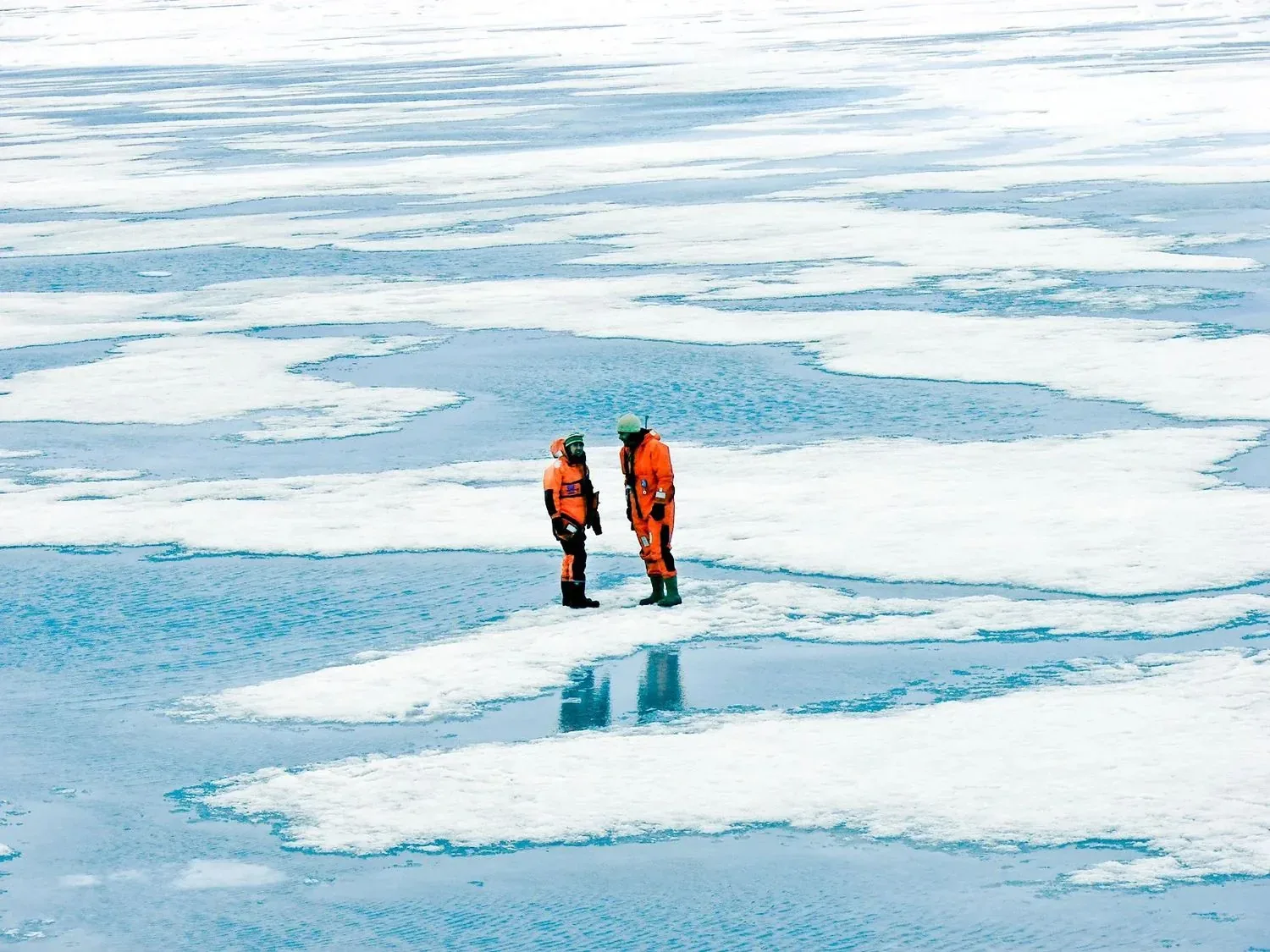
Photograph: Immersive Leaders programme photography — all rights reserved by Immersive Leaders by ISSET
An expedition can sound like an answer before anyone has agreed the question. If your leadership team is struggling with judgement, coordination or mutual support, an Arctic setting may make those patterns visible, but distance alone will not improve them. The useful work begins with deciding what the team needs to examine and whether this environment is appropriate.
Treat the environment as a responsibility, not a prop
Remote cold environments introduce practical consequences that cannot be treated as theatrical pressure. Weather, remoteness and changing conditions affect what is possible. Any development objective must sit beneath competent expedition management, appropriate medical planning and clear safety authority. Learning never justifies pushing past a professional decision to stop.
Ask prospective providers to explain the environment, the activity and the competence required to manage both. Seek relevant evidence rather than assuming that a familiar destination name tells you enough. Establish how they assess suitability, prepare participants and decide whether the intended itinerary remains appropriate.
The sponsor also needs an honest rationale. If the same learning could be achieved more inclusively close to home, consider that seriously. An expedition should be chosen because its structure serves a worthwhile purpose, not because a remote location makes an internal proposal sound more impressive.
Look for the habits visible during preparation
Preparation is already team behaviour. Notice who reads the brief, who asks questions and whether uncertainties are shared early enough to resolve. A colleague who flags an unclear requirement may be protecting the group, not demonstrating a lack of confidence. Treat those enquiries as useful information.
Make responsibilities explicit without turning preparation into a secret assessment. Participants should know what they are expected to do, where professional guidance is required and who can answer questions. Personal health information belongs in an appropriate confidential process, not in a shared team document.
- Clarify who owns practical decisions and who provides specialist advice.
- Confirm how changes to plans will reach every participant.
- Check that concerns can be raised without becoming a public test of commitment.
Preparation can reveal whether the team relies on an informal organiser to repair everyone else's omissions. That pattern is worth discussing before the group becomes more dependent on one another.
Examine how the team uses expertise
Away from familiar offices, corporate seniority is not a substitute for environmental knowledge. The useful leadership question is whether people recognise relevant expertise and act on it. Can a senior executive follow instructions, ask a basic question and accept a boundary without making it a negotiation?
This is not an argument for suspending all participant judgement. Good teams can ask for explanations and flag concerns while respecting the expedition leader's authority. The distinction is between contributing information and assuming the right to override a decision outside one's competence.
During reflection, explore how expertise was recognised. Who was consulted, whose uncertainty was heard and what made advice credible? Then examine whether similar patterns exist at work. Organisations often say they value expertise while allowing rank, confidence or familiarity to determine which voices shape a decision.
Notice the work that prevents visible trouble
Expedition stories tend to favour dramatic moments. Team effectiveness may be more apparent in ordinary care: checking shared understanding, managing equipment responsibly or noticing that someone needs a pause. These actions matter partly because they prevent a situation becoming dramatic in the first place.
Avoid interpreting every sign of fatigue as a personality trait. Physical conditions, sleep, unfamiliar routines and personal circumstances affect behaviour. A responsible facilitator distinguishes observation from diagnosis and does not turn discomfort into a convenient story about resilience.
Ask the group what made it easier to speak early. Was help offered in a way that preserved dignity? Did people need to appear in difficulty before support became available? Those questions can reveal assumptions about workload and mutual responsibility without requiring anyone to disclose private information to justify their experience.
Debrief decisions without romanticising hardship
Reflection should fit the conditions and preserve welfare. Some observations can be captured briefly during the expedition, while fuller discussion may belong somewhere warm and settled. Do not assume that exhaustion produces unusually honest or useful insight. It may simply make people tired.
Reconstruct a decision with attention to what was known at the time. Identify how information moved, which assumptions were checked and how authority operated. Avoid rewarding the most dramatic account or treating persistence as inherently admirable when changing the plan was the sounder choice.
- What prompted the team to reconsider its original plan?
- How did someone signal a concern before it became urgent?
- Which quiet contribution made other people's work easier?
Allow participants to disagree about meaning. The purpose is to understand coordination, not to produce a heroic group story that everyone must endorse.
Bring the interdependence home without importing the hardship
Choose a workplace experiment that captures the useful mechanism. That might be a clearer escalation route, an explicit check on capacity or a practice of consulting the person closest to a risk. It should not involve recreating discomfort in an office to make the lesson feel authentic.
Review whether the change survives normal pressures and competing incentives. If people are discouraged from asking for help at work, memories of mutual support elsewhere will not fix the contradiction. The expedition's value lies in making a pattern discussable and giving the team a credible way to change it, not in proving that everyone endured the same landscape.
Bring this to your team
We run NASA-style simulations, astronaut keynotes and leadership expeditions for organisations that need their leaders to make good calls under pressure.
Book a Call