Offsites & Simulations · 12 November 2026 · 5 min read
Leadership Offsite Agenda Examples That Do Not Waste the Day
Explore leadership offsite agenda examples that protect decision time, balance discussion with practice and turn a day away into useful commitments.
Written by Sarah Murray
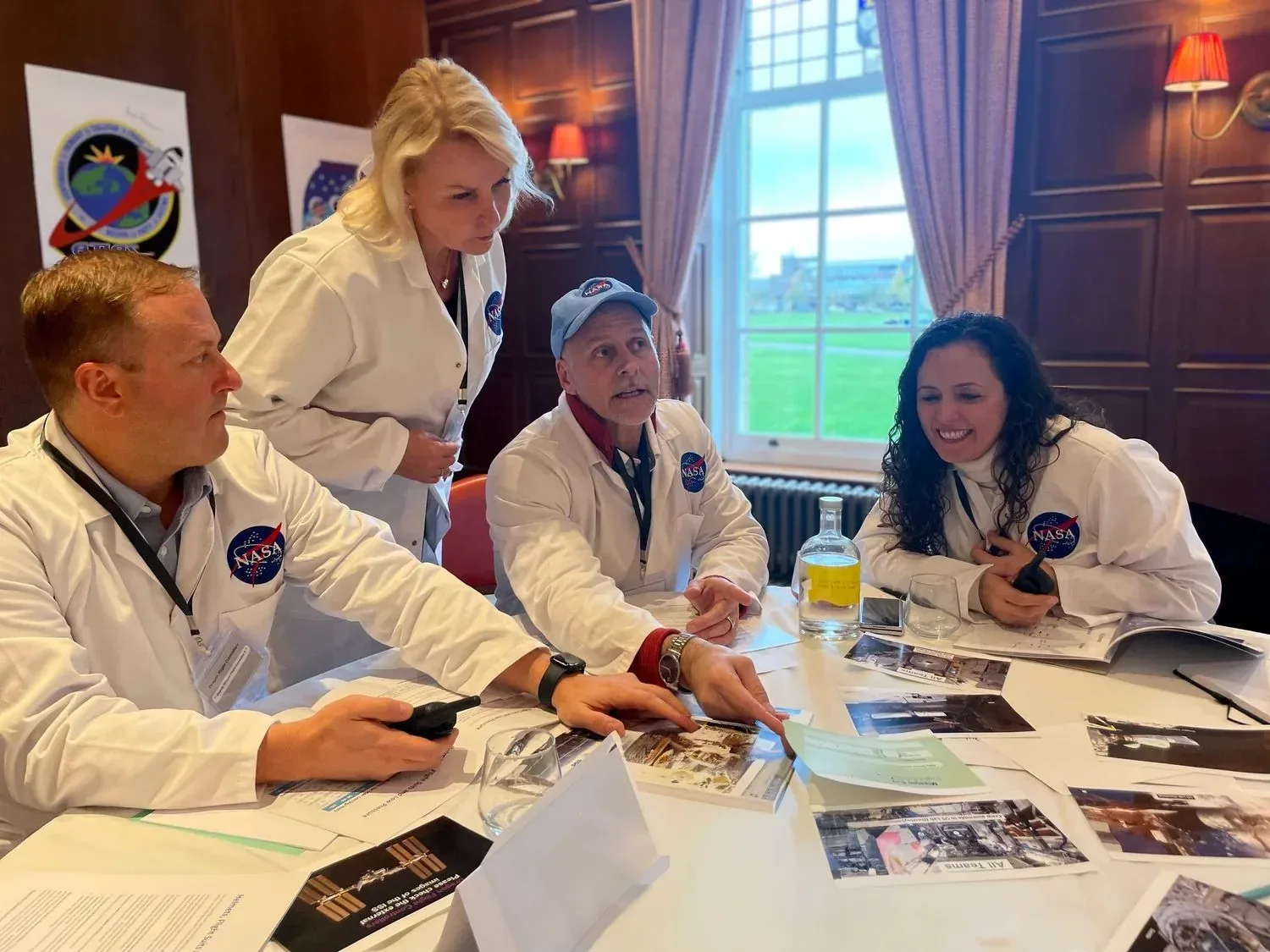
Photograph: Immersive Leaders programme photography — all rights reserved by Immersive Leaders by ISSET
Your leadership team has cleared its diaries, but the proposed agenda is already full of updates everyone could read beforehand. You need the day to resolve something difficult, not relocate the weekly meeting. Start by deciding which conversations deserve people being in the same room.
Choose the decision before booking the activity
An offsite needs a working purpose that can survive a challenge from the finance director. Improving collaboration is too broad to guide an agenda. Agreeing how commercial and operational leaders will resolve conflicting priorities is specific enough to design around. Name the unresolved issue, the people whose judgement matters and the decision authority in the room.
Separate decisions from exploration. A team can examine an uncertain market without pretending it will produce a finished strategy by tea time. Label each session accordingly and state what evidence will demonstrate progress. Where a decision depends on absent colleagues, settle the consultation route beforehand rather than discovering the limitation during the closing discussion.
Ask the sponsor what must be different in the next routine meeting. If the answer remains a feeling, keep working on the brief. A practical agenda begins with a change the team can recognise.
Use a morning for alignment, not reporting
A strategy morning can begin with silent reading of a short evidence pack, followed by questions about conflicting interpretations. Move into the actual choice while people still have attention available. Reserve the end of the morning for testing consequences, rather than unveiling another presentation.
The evidence pack should distinguish facts, assumptions and proposals. Otherwise the first discussion becomes an argument about which figures are current. Ask contributors to identify what would change their recommendation. That is more useful than requesting polished slides defending positions everyone already knows.
- Opening: confirm the decision, authority and working agreements.
- Working discussion: compare options against agreed criteria and examine the strongest objection.
- Closing record: capture the choice, unresolved dependencies and who must be consulted.
This shape suits teams with a live strategic choice. It is less useful when members cannot yet discuss disagreement directly. In that case, address the working relationship before expecting a neatly reasoned conclusion.
Put a practical exercise before the behaviour discussion
For an agenda focused on team effectiveness, give the group a shared task before asking it to assess itself. A simulation can expose how information travels, who becomes overloaded and whether anyone challenges the first plausible plan. Choose an exercise that makes the target behaviour observable rather than merely entertaining.
Brief participants on the learning purpose without telling them which personalities you expect to emerge. Arrange observation around events: a warning was missed, a handover lacked confirmation, a decision had no owner. Avoid labels such as dominant or disengaged. They turn an examination of work into a verdict on character.
After a proper break, reconstruct a consequential moment together. Compare what each person knew at the time. The useful surprise is often that apparently unreasonable behaviour made sense from a different information position.
Protect the awkward middle of the afternoon
After lunch, a lengthy presentation invites polite disappearance. Use that period for structured application instead: map a real decision process, rehearse a difficult handover or test a proposed operating agreement against a recent problem. Movement can help, but changing rooms is not a substitute for changing the work.
Keep the assignment visible and give groups a common output format. Without that discipline, one table returns with a recommendation while another returns with an interesting conversation. Both may have worked hard; only one has answered the question.
Build in a review point before discussion expands. Ask what remains unresolved and whether the group needs more evidence, a decision or a smaller follow-up conversation. Not every issue earns the remaining afternoon simply because it is emotionally interesting.
Make room for disagreement without letting it sprawl
Facilitators should distinguish useful conflict from repeated position statements. When the same argument returns, pause and identify the underlying difference: evidence, risk appetite, incentives or authority. Each requires a different response. More airtime rarely repairs an unclear decision right.
Offer quiet thinking before open debate, particularly when hierarchy is strong. Invite the person accountable for the decision to hear alternatives before announcing a preference. This does not remove their authority; it stops their first sentence becoming everyone else's starting position.
- Ask what evidence would make either position change.
- Record a minority concern beside the decision rather than smoothing it away.
- Park unrelated issues with an owner and a route back, not an anonymous list.
A parking list without ownership is simply a discreet way to lose work. Review it before anyone leaves, while people can still challenge what has been deferred.
Finish with the next ordinary meeting
The closing session should translate the day into existing routines. Choose the meeting, handover or planning process where a new agreement will first be tested. Name who will notice whether it happens and what evidence they will bring back. Avoid creating a separate reporting ceremony unless it serves a clear purpose.
Send a concise decision record, including the reasoning and remaining uncertainties. Photographs of crowded flipcharts are not a substitute. At the next leadership meeting, inspect one consequential commitment before moving to new business. The offsite has earned its place only when ordinary work starts to operate differently.
Bring this to your team
We run NASA-style simulations, astronaut keynotes and leadership expeditions for organisations that need their leaders to make good calls under pressure.
Book a Call