Team Performance · 3 November 2026 · 5 min read
Decision-Making Under Pressure: A Framework From Mission Control
A practical framework for decision-making under pressure: clarify the problem, test assumptions, assign responsibility and know when to review the choice.
Written by Christopher Barber
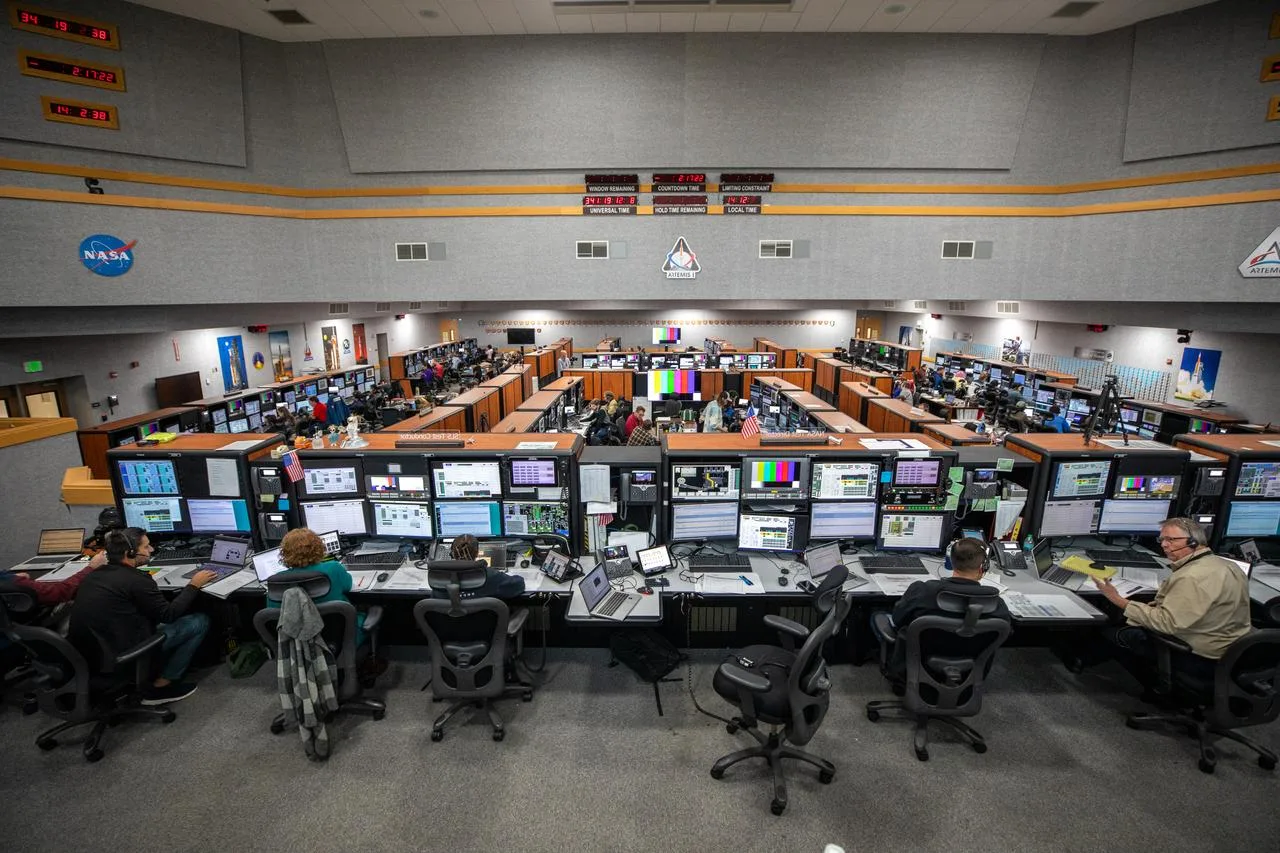
Photograph: Artemis II Terminal Count Simulation (ISVV-3) — NASA, public domain
The deadline is approaching, information is arriving in fragments and several people want an answer. In that moment, a leadership team needs more than a request to stay calm. It needs a shared way to turn incomplete information into a decision that somebody can carry out.
A Mission Control lens is useful because it directs attention towards roles, communication and changing conditions. The framework below is a practical adaptation for business, not an official NASA procedure. Its purpose is to make judgement visible when there is little time to explain yourself twice.
Establish what requires a decision now
Start by stating the decision in one sentence. Deciding whether to pause a service is different from diagnosing the underlying fault. The diagnosis may take hours; the immediate choice may need to happen within minutes. Mixing them creates a meeting in which everyone is solving a different problem.
Name the deadline and explain why it exists. A genuine operational limit should shape the discussion. A senior person's impatience should not automatically become the team's decision window. If nobody can explain the urgency, check whether you have more time to gather evidence than the room assumes.
Set the immediate priority. Protecting people, meeting legal duties and preventing further harm may constrain the options before commercial preferences enter the conversation. Refer to the organisation's relevant procedures and authorised specialists rather than expecting an improvised framework to replace them.
Separate observations from interpretations
Ask contributors to distinguish what they have seen from what they think it means. An observation might be that a scheduled transfer has not completed. An interpretation might be that a supplier has failed. Both matter, but they should not be recorded as equally certain.
Use a simple shared record with confirmed information, assumptions and unanswered questions. Put a source and time beside information that may change. Someone joining halfway through should be able to understand the current picture without asking the whole group to repeat the conversation.
Give uncertainty a practical consequence. If an assumption is wrong, would it change your choice? If not, park it. If it would, assign someone to check it within the available time. This keeps investigation connected to the decision rather than becoming a search for reassuring detail.
Give expertise a clear route into the room
Make one person accountable for the decision and identify the people whose expertise is required. Accountability does not mean that person must know the most about every issue. It means the group knows who will bring the discussion to a conclusion and explain the basis for it.
Invite the relevant specialist to speak before the most senior generalist offers a preferred answer. Ask what the evidence supports, where confidence is weak and what would make the proposed action unsafe. A useful challenge examines the option; it does not ask someone to defend their status.
Keep coordination separate from technical investigation where the situation warrants it. The person checking a fault should not also have to chair every update. If resources are limited, explicitly acknowledge the competing responsibilities and decide which communication can wait.
Compare workable options, not perfect answers
Generate a small set of credible choices, including the consequences of waiting. For each, consider likely benefit, possible harm, reversibility and the resources needed. Avoid an elaborate scoring exercise when the available evidence cannot support precise numbers. Plain comparisons can be more honest than decorative arithmetic.
A reversible step may be useful when it preserves options while improving the information available. That does not make experimentation appropriate everywhere. Check safety, contractual and regulatory constraints first. Where an action cannot readily be undone, give the assumptions and approval requirements proportionate attention.
- What are we trying to protect or achieve before the next review?
- Which assumption could make this option unacceptable?
- What would cause us to stop, reverse or escalate?
- Who has the authority and capacity to act?
Before closing, ask for the strongest unresolved objection. Do not treat silence as evidence that everyone agrees. Give people a direct opportunity to identify a risk, then record how the decision owner has dealt with it. An objection can remain valid even when the team proceeds.
Turn the choice into coordinated action
State the decision, the reason, the owner and the next checkpoint. Ask the person receiving a critical instruction to summarise what they will do. This is a check on shared understanding, not a memory test. Correct any mismatch before people leave to work independently.
Specify what should trigger an earlier return. A review scheduled for the afternoon is not permission to ignore a material change at lunchtime. Triggers might concern safety, capacity, a missed dependency or evidence that a central assumption no longer holds. Choose triggers that somebody can actually observe.
Keep a brief decision log while the situation develops. Record the information available at the time, not a polished explanation written after the result is known. This helps a later review distinguish a reasonable decision with an unwelcome outcome from a weak process that happened to succeed.
Practise the process before relying on it
Rehearse with a bounded fictional scenario and a changing information picture. Observe whether the team identifies the decision, invites expertise and confirms responsibilities. Do not judge the exercise solely by whether participants guess the intended answer. The route to the choice is part of what needs examining.
For the next pressured decision, prepare one page with five headings: decision, evidence, options, owner and review trigger. Fill it in as the discussion happens. If the group cannot complete a heading, that gap tells you exactly what needs attention before the next instruction is issued.
Bring this to your team
We run NASA-style simulations, astronaut keynotes and leadership expeditions for organisations that need their leaders to make good calls under pressure.
Book a Call