Offsites & Simulations · 17 August 2026 · 6 min read
A Desert Team Challenge: What Sand and Distance Change
Design a desert team challenge programme around sound planning, specialist support and useful reflection, without confusing endurance with leadership ability.
Written by Sarah Murray
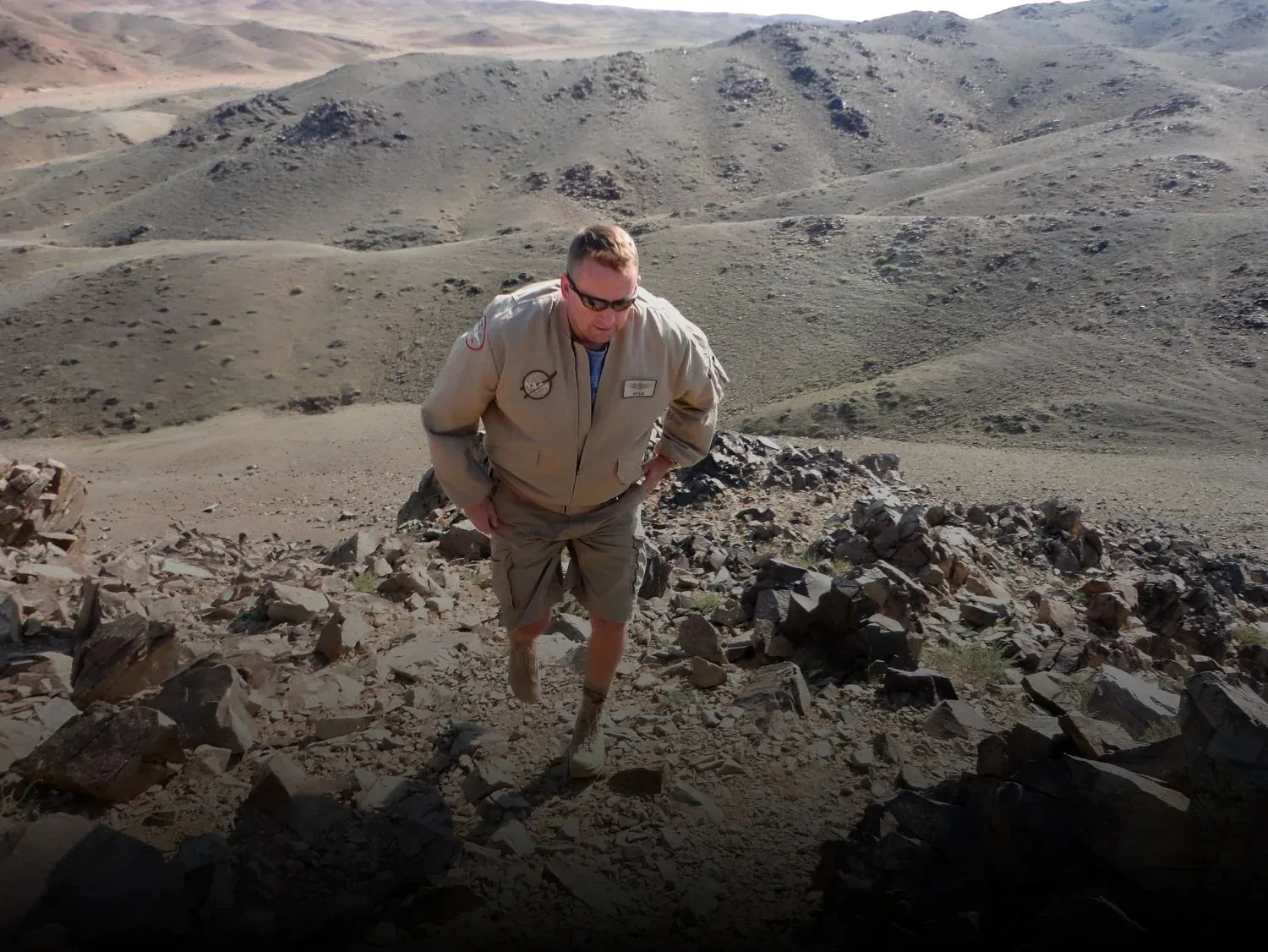
Photograph: Immersive Leaders programme photography — all rights reserved by Immersive Leaders by ISSET
Taking a team into the desert does not automatically strip away hierarchy or reveal everyone's true character. It changes the conditions under which people plan, communicate and manage limited resources. If those changes are not deliberately connected to a learning purpose, you may organise a demanding journey and return with little more than strong opinions about footwear.
Choose the decision you want to examine
Define the workplace behaviour before selecting the expedition format. A team struggling with handovers may benefit from examining how information moves between roles. A team that repeatedly overcommits might explore how it revises plans when resources or conditions change. Neither purpose requires turning the journey into a competition to see who tolerates discomfort most quietly.
Explain what participants will be asked to do and what remains the responsibility of the expedition professionals. Developmental tasks should fit inside safe operational boundaries. Teams might discuss route options supplied by guides, for example, without assuming authority over route safety. The design should make those boundaries explicit so that learning about responsibility does not become confusion about who is actually in charge.
Treat the environment as a planning constraint
Desert conditions vary by location, season and terrain. Heat, cold, exposure, navigation difficulties and access to support need specialist assessment rather than generic advice. Ask the provider how it selects travel windows, monitors conditions and changes plans. A credible proposal should discuss limitations and cancellation decisions without treating them as an unfortunate interruption to the adventure story.
Water, shelter, communications, medical support and evacuation arrangements belong in the operational plan. They are not resources to withhold in order to manufacture a leadership lesson. The organiser does not need to become an expedition specialist, but does need enough information to judge whether competent people own these responsibilities. Where expertise is outside your organisation, establish how it has been checked and who can challenge the plan.
- What conditions would require a route change, delay or cancellation?
- How are medical needs, communications and evacuation arrangements managed?
- Which decisions belong to guides, and which can participants practise?
Make preparation part of the learning
Preparation reveals habits that an event alone can miss. Notice how the group gathers information, allocates responsibilities and checks assumptions. Does someone quietly become the organiser of everything? Are concerns raised early, or saved for private conversations? Discuss these patterns without turning every administrative mistake into a judgement about character.
Provide clear information about physical demands, equipment, travel requirements and the support available. Include a confidential route for discussing health and accessibility needs. Attendance must not become a test of commitment, especially where personal circumstances make an extended trip difficult. Offer an alternative development route with genuine value. A leadership programme loses credibility quickly if its first lesson is that sensible boundaries will damage your reputation.
Watch how the team revises a plan
Distance and unfamiliar surroundings can make the cost of a poor assumption more visible. Use planned reflection points to examine what the group expected, what changed and how the next decision was reached. Guides retain authority over safe movement and operational matters. Participants can still learn a great deal from how they share new information within those limits.
Look for the quieter behaviours: someone correcting an inaccurate assumption, asking whether everyone understood the plan or acknowledging that a preferred option no longer works. These moments are often more revealing than a confident speech at the start. Avoid praising persistence without examining its consequences. Continuing with an unsuitable approach is not leadership simply because abandoning it would feel disappointing. A revised plan may be the clearest evidence that people are paying attention.
Build reflection around conditions, not personalities
Hold discussions when the group can properly engage, rather than assuming exhaustion produces honesty. Ask what information was available and how responsibilities were understood. Invite participants to explain constraints that observers may have missed. Discomfort can narrow attention, so an account delivered confidently at the end of a difficult day should not become the official truth by default.
Connect observations to work carefully. Limited expedition resources can prompt useful discussion about priorities, but colleagues are not supplies to be rationed. Keep the analogy specific enough to illuminate an actual organisational decision.
- Where did the group confuse an assumption with established information?
- What made it easier to challenge the current plan?
- Which responsibility was unclear, and how was that uncertainty resolved?
Return with a changed operating agreement
Translate the learning into something the team can use in its ordinary setting. That might be a clearer planning brief, an agreed escalation route or a habit of checking resource assumptions before committing. Assign ownership and choose a real piece of work on which to test it. Avoid writing a long expedition manifesto that nobody will consult once the inbox returns.
Include recovery and return-to-work arrangements in the programme design. An ambitious development experience should not depend on participants immediately absorbing all the work that accumulated while they were away. Later, review both the experience and its transfer. A desert team challenge earns its place through the quality of its planning and the usefulness of the behaviour it changes, not through how remote the photographs look.
Bring this to your team
We run NASA-style simulations, astronaut keynotes and leadership expeditions for organisations that need their leaders to make good calls under pressure.
Book a Call