Offsites & Simulations · 24 September 2026 · 5 min read
How to Run a Leadership Simulation Day, Hour by Hour
Learn how to run a leadership simulation day with a practical timetable, clear role briefings, purposeful observation and time for a useful debrief.
Written by Sarah Murray
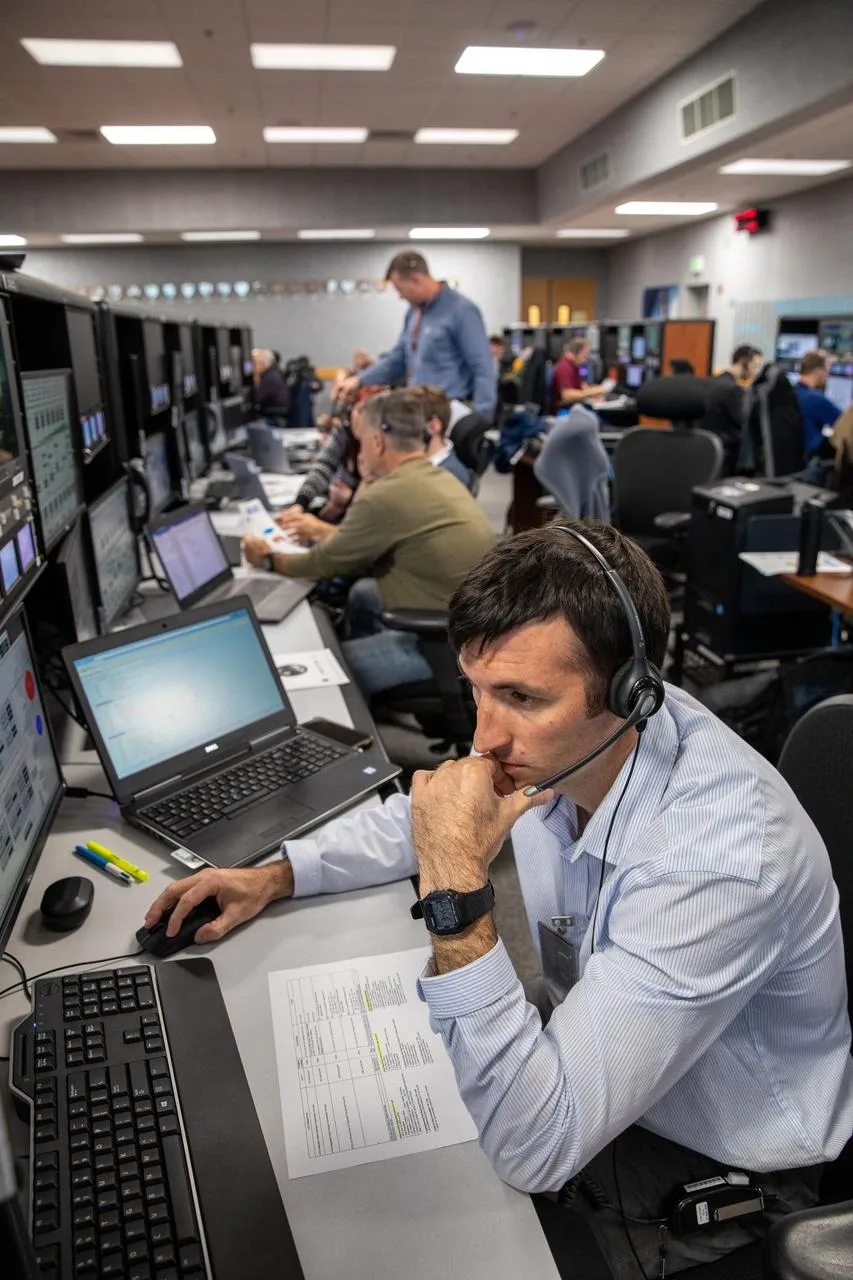
Photograph: Launch Team Firing Room I Simulation for Artemis I — NASA, public domain
You have a date, a room and a leadership team expecting a worthwhile day, but the simulation is threatening to consume the entire agenda. The exercise is only part of the work. A sound running order gives briefing, observation, reflection and application proper space rather than fitting them around the entertainment.
Before arrival: settle the purpose and boundaries
Agree a learning objective with the sponsor before confirming the detailed scenario. Choose something observable, such as testing how leaders update one another when priorities change. Define who will facilitate, who will manage logistics and who has responsibility for participant welfare. These roles can overlap, but they must not disappear into a general assumption that the supplier handles everything.
Circulate practical information in advance, including access arrangements, clothing requirements and the nature of participation. Ask for adjustments privately. Confirm what data will be captured and who will receive any notes. A development day should not quietly become an assessment exercise because a senior sponsor wants individual scores afterwards.
The timings below are an illustrative planning scaffold, not a prescribed duration or a claim about a particular programme. Adapt them to the group, the scenario and the access requirements identified during preparation.
09:00: establish the learning contract
Begin with the organisational problem and the behaviour being explored. Explain that the scenario provides evidence for discussion, not a complete judgement of anyone's leadership. Invite participants to ask questions about boundaries, confidentiality and how the debrief will work. Deal with practical uncertainty before introducing task uncertainty.
At 09:30, brief the scenario and allocate roles. Check understanding by asking participants to explain their responsibilities and sources of information. Reading instructions aloud is not evidence that the instructions have landed. Make clear which rules are fixed and which choices belong to the team.
- Confirm the shared objective and the conditions that would stop the exercise.
- Explain how participants can request clarification or an adjustment.
- Identify the observers and the behaviours they will be watching.
Leave a little space between instructions and action. A rushed launch often creates confusion that tells you more about the briefing than about the team.
10:00: run the scenario without coaching every move
Once the task begins, let participants make decisions within the agreed boundaries. The facilitator should not rescue every uncomfortable silence or missed signal. Equally, there is no merit in allowing a misunderstanding of the rules to ruin the exercise. Distinguish an operational choice from a design problem requiring clarification.
Observers should record moments relevant to the learning objective. Note what happened, what information was available and what followed. Avoid running commentary from the edge of the room. Participants cannot experiment freely if every hesitation attracts a visible judgement.
Plan a natural pause around 11:00, or at a suitable scenario boundary, to check welfare and practical needs. Do not use the break to leak the preferred solution. If the group is to resume, keep the same information boundaries unless changing them is an intentional part of the design.
11:30: reconstruct events before interpreting them
Bring the exercise to a clear stop and allow people to step out of their roles. Start the review with a factual account of the task and its turning points. Ask different roles what they understood at a consequential moment. Their accounts may conflict without anyone being dishonest or inattentive.
Move from events to reasoning: what were participants trying to achieve, what did they assume and what alternatives seemed possible? Avoid asking why somebody failed to do the obviously correct thing. That question smuggles the conclusion into the discussion and invites a defensive answer.
Use the period before lunch to establish the shared account, not to force a finished lesson. A proper break allows people to return with a less immediate attachment to the outcome. Protect lunch from becoming an unofficial extension of the exercise for those who need time away.
13:30: test an alternative, then connect it to work
After lunch, invite the team to select a coordination change based on the morning's evidence. This might concern escalation, confirmation of instructions or the distribution of decision authority. If the design allows a further round, make clear what is being tested and what other conditions have changed.
A different result is not proof that the new habit caused it. Familiarity with the task may also help. Use the comparison to sharpen a hypothesis rather than manufacturing a success story. Ask which moments became easier and whether the change created any new difficulties.
- Where does the same coordination problem appear in ordinary work?
- What existing routine could accommodate the proposed change?
- What evidence would suggest the change is not helping?
Around 14:30, apply the discussion to a genuine upcoming decision or handover. Keep confidential business material within the agreed boundaries and avoid turning this into an unplanned operational meeting.
15:30: close with a testable working agreement
Reserve the final session for a concise agreement: the behaviour to try, the working context, the owner and the review occasion. Ask participants to identify foreseeable obstacles while everyone is still present. An agreement that depends on authority nobody holds needs revision before the group leaves.
Finish with enough time for practical questions and private feedback. Afterwards, circulate the decisions and learning points that the group has agreed may be shared. Preserve the distinction between team development and personal assessment. A well-run day ends with useful evidence and a credible next experiment, rather than a hurried promise to communicate better.
Bring this to your team
We run NASA-style simulations, astronaut keynotes and leadership expeditions for organisations that need their leaders to make good calls under pressure.
Book a Call