Offsites & Simulations · 27 September 2026 · 6 min read
The Via Ferrata as a Team Challenge: Why the Rope Works
Plan a via ferrata team challenge with clear learning aims, qualified guidance and inclusive choices, then turn the experience into useful workplace practice.
Written by Christopher Barber
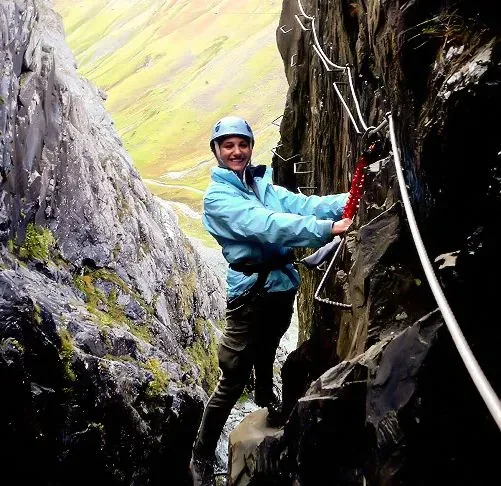
Photograph: Immersive Leaders programme photography — all rights reserved by Immersive Leaders by ISSET
A dramatic route can fill the calendar and still teach a team very little. If you are considering a via ferrata team challenge, the useful question is not who will be brave enough to finish. It is whether the experience can reveal how people communicate, ask for help and make decisions without turning discomfort into a test of loyalty.
Understand what actually provides protection
A via ferrata is an equipped route that commonly uses fixed cables, metal steps or ladders to support progress through exposed terrain. Participants use appropriate equipment and follow the procedures specified by qualified guides. A separate rope may be used where the guide judges it necessary, but the activity is not simply a group tied together and sent uphill.
That distinction matters when describing the experience to a leadership team. Shared responsibility is a useful learning theme; shared technical responsibility should not be invented for effect. The provider's safety arrangements must remain authoritative. Participants can practise communication and judgement without being asked to improvise protective systems or make technical decisions beyond their competence. Avoid promotional language that confuses dependence on colleagues with the actual means of preventing a fall.
Ask the provider about suitability, not spectacle
Start with route suitability, guide competence, equipment, weather limits and emergency arrangements. Ask how participants are assessed and how the provider handles someone who cannot continue. Route names and attractive photographs do not answer those questions. The right challenge depends on the group, conditions and available alternatives, not the ambition of the organiser.
Discuss medical and accessibility considerations through a confidential process before attendance becomes socially difficult to decline. Participants need honest information about exposure, physical demands, available facilities and the limits of adjustments. Be cautious about promises that everyone can do it. A provider who explains constraints plainly is offering more useful information than one who treats every concern as a confidence issue.
- Who decides whether the route remains suitable as conditions change?
- What happens if a participant needs to stop or leave the route?
- How are guides qualified, and how is equipment selected and checked?
Make participation a genuine choice
A nominal opt-out is not enough if declining means disappointing the managing director in front of colleagues. Provide an alternative with equal standing and a clear learning purpose. Explain that choosing not to continue may demonstrate sound judgement rather than insufficient commitment. Leaders should support that position before the group reaches the activity, not invent it after someone becomes distressed.
Do not use an outdoor challenge as an undisclosed assessment of promotion potential. Height confidence, physical capability and familiarity with climbing are not proxies for leadership quality. Make the purpose and use of observations explicit. If the organisation wants developmental feedback, agree what will be observed and who will see it. Psychological pressure does not become acceptable merely because the scenery is impressive.
Observe communication without interrupting instruction
Choose a narrow learning question, such as how the team checks understanding when attention is stretched. Observe whether people ask for clarification, communicate uncertainty and notice when others need space. Technical instruction and guide directions take precedence over any development exercise. Never add artificial distractions or surprise tasks that interfere with safe movement.
Avoid narrating every interaction as it happens. People concentrating on unfamiliar terrain do not need a running commentary on their leadership style. Capture observations when appropriate and discuss them later, with room for participants to explain what they experienced. Someone's silence might reflect concentration, discomfort or simply respect for an instruction. An outdoor facilitator should resist assigning motives from a distance, particularly where the interpretation conveniently supports the planned lesson.
Debrief decisions rather than courage
Once the group is comfortable and able to reflect, ask about specific moments. Where did a clear instruction help? When was uncertainty raised? What made it easier or harder to request support? Keep the distinction between technical guidance and workplace analogy intact. An office disagreement is not a mountain emergency, however strongly someone feels about the project.
Invite different accounts without forcing a shared emotional conclusion. One participant may have found the experience absorbing, another unpleasant, and another entirely familiar. None of those reactions invalidates a useful discussion about communication.
- Describe a moment when you checked rather than assumed understanding.
- Identify a request for help and the response it received.
- Name a workplace situation where the same communication habit would help.
Transfer a habit, not a heroic story
Agree a practical workplace experiment linked to what the group noticed. A team might clarify handover messages, establish a reliable way to pause a discussion or check whether instructions have been understood. Define where that habit will be tried and how colleagues will recognise it. The point is a small operational change, not a permanent comparison between routine work and climbing.
Review the experiment after there has been a real opportunity to use it. Ask what transferred, what did not and which workplace conditions made the difference. The route may provide a memorable shared reference, but memory alone is not evidence of development. A worthwhile via ferrata challenge leaves the team with a more precise understanding of its behaviour, including the judgement to recognise when an apparently inspiring activity is the wrong choice.
Bring this to your team
We run NASA-style simulations, astronaut keynotes and leadership expeditions for organisations that need their leaders to make good calls under pressure.
Book a Call