Team Performance · 30 July 2026 · 5 min read
NASA Teamwork Principles That Transfer to a Leadership Team
Explore NASA teamwork principles for leadership teams, from shared priorities and clear roles to useful challenge, disciplined handovers and debriefs.
Written by Christopher Barber

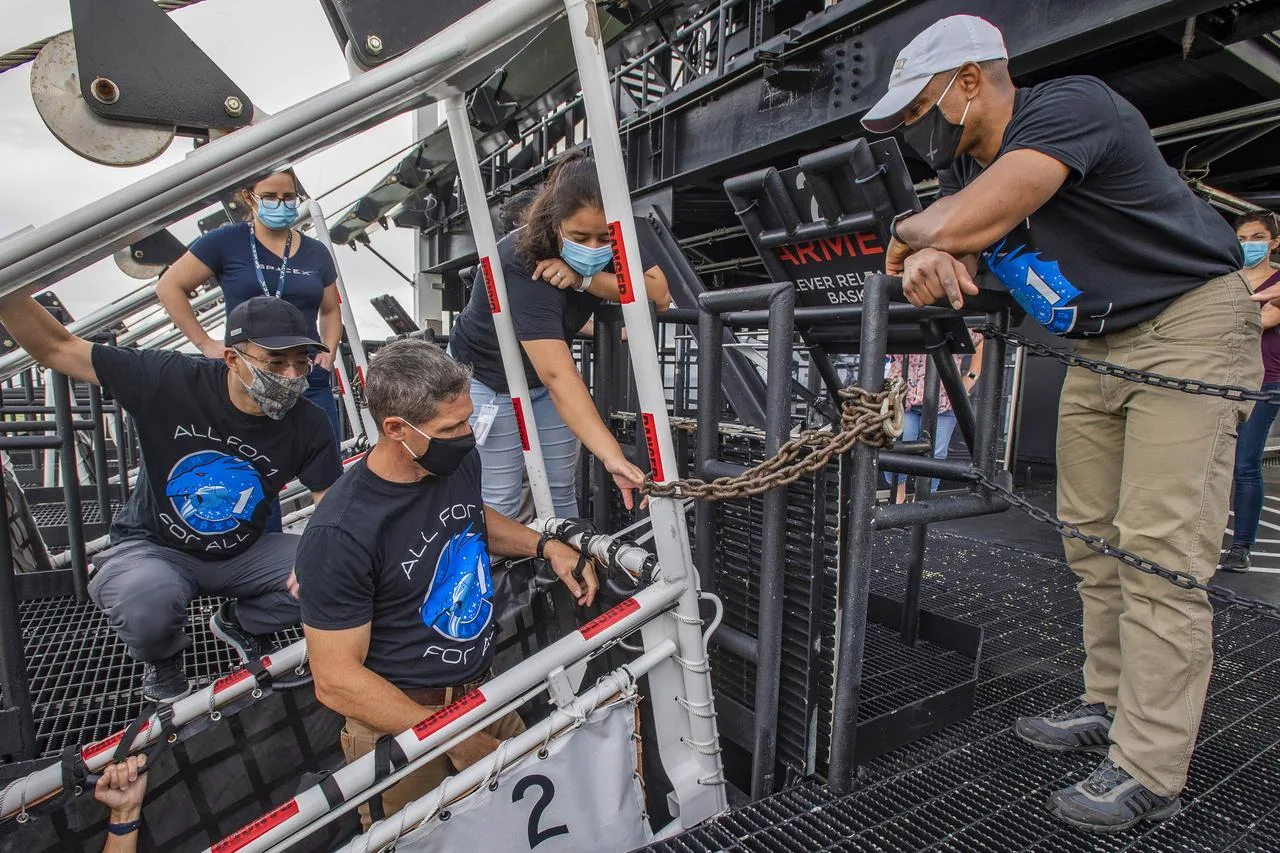
Photograph: SpaceX Crew-11 and Expedition 73 crew members train together — NASA, public domain
A leadership team can contain impressive individuals and still struggle to act as a team. Finance sees one risk, operations sees another, and the shared decision emerges through negotiation rather than a clear view of the whole task. Expertise is present; coordination is what needs work.
NASA-style teamwork offers a useful lens, provided the comparison stays honest. A business meeting is not a space mission, and the practices below are transferable leadership habits rather than an official NASA checklist. The question is which habits help your team combine expertise when people hold different pieces of the picture.
Define the shared task before dividing it
Start by explaining what the team must achieve together. Departmental objectives may all be reasonable while pointing towards incompatible choices. A shared task needs enough specificity to guide trade-offs: what matters now, what cannot be compromised and what can wait if resources become constrained.
Ask each leader to describe the shared priority in their own words. Differences are useful evidence, not an embarrassment to move past quickly. If one person is protecting launch timing and another is protecting service stability, the team needs to resolve that tension explicitly rather than discover it through conflicting instructions.
Keep the shared priority visible as circumstances change. Revisit it when new information affects the work, not merely at a scheduled strategy review. Explain any change to those implementing decisions so that yesterday's priorities do not continue driving today's activity without anyone noticing.
Give roles boundaries and connections
A role description should explain more than the work someone owns. It should identify the information they need, the decisions they can make and the points at which another role must be involved. Teamwork often becomes difficult at these boundaries, even when responsibilities within departments are clear.
Map one important dependency between functions. What does the receiving team need, by when and in what form? Who acknowledges receipt? What happens if the information is incomplete? A short conversation about these questions can be more useful than another diagram showing formal reporting lines.
Avoid making collaboration depend on personal goodwill alone. Agree the routine handover and escalation route while relationships are working well. Then check whether an alternate can use them when the usual contact is absent. A dependable arrangement should not require everyone to know whom to telephone privately.
Treat communication as part of the task
Decide which information needs a prompt update and which belongs in a scheduled review. If every message appears urgent, colleagues have to infer importance from the sender's status or persistence. Clear expectations let the team direct attention towards changes that affect action.
For critical instructions, ask the recipient to confirm their understanding of the action and timing. This is not a request to repeat every conversation. Use it where a misunderstanding would matter. The sender should correct ambiguity rather than treating the recipient's uncertainty as evidence of poor listening.
Maintain an accessible record of decisions and current assumptions. A team working from several private versions of the plan cannot coordinate reliably. Name who maintains the record and how colleagues know something has changed. The tool can be simple if the responsibility is clear.
Make challenge useful before agreement
Invite relevant expertise before settling on a preferred option. Ask what evidence might change the proposal and which risk the current discussion is underestimating. A specialist should not have to compete with the senior team's desire to bring a difficult conversation to a quick close.
Separate challenge from decision authority. Colleagues need room to question an option, but somebody still needs to conclude the discussion. State the reasoning, acknowledge unresolved concerns and identify what new evidence would trigger reconsideration. Agreement to proceed need not imply that every uncertainty has disappeared.
Practise receiving unwelcome information without turning the exchange into a contest. A calm request for the evidence is more useful than immediate reassurance that everything is under control. The goal is to improve the team's picture, not protect the confidence of the person presenting it.
Rehearse coordination, then examine it
Immersive Leaders by ISSET uses NASA-style simulations involving real-time challenges, cross-team collaboration and debriefing. In choosing any simulation, look for the connection between the exercise and your actual coordination problem. A memorable setting is not, by itself, evidence that the relevant behaviour has been practised.
Give observers something concrete to watch: whether priorities were restated, handovers were acknowledged or expertise reached the decision owner. Avoid judging participants solely by the final result. A team may reach a good answer through an unreliable process, or work sensibly with incomplete information and still face an unwelcome outcome.
- Which piece of information failed to reach the person who needed it?
- Where did two roles make different assumptions about responsibility?
- What helped a colleague question the plan constructively?
- Which routine should the team try again in its normal work?
Transfer one habit into the working week
Choose one recurring meeting or handover as the place to apply a lesson. Define the new behaviour precisely, such as closing each decision with an owner and review trigger. Ask someone to notice whether it happens and whether it helps the receiving colleague act without further clarification.
After several attempts, review the habit with the people using it. Keep what improves coordination and adjust what adds unnecessary ceremony. The useful transfer from a mission setting is not the vocabulary or atmosphere. It is an arrangement that lets different specialists understand the same task, challenge the plan and act together.
Bring this to your team
We run NASA-style simulations, astronaut keynotes and leadership expeditions for organisations that need their leaders to make good calls under pressure.
Book a Call