Offsites & Simulations · 11 June 2026 · 5 min read
Offsite Facilitation: Timings, Transitions and the Dead Zones
Improve offsite facilitation agenda timing with purposeful transitions, realistic discussion space and practical ways to manage drifting sessions.
Written by Sarah Murray
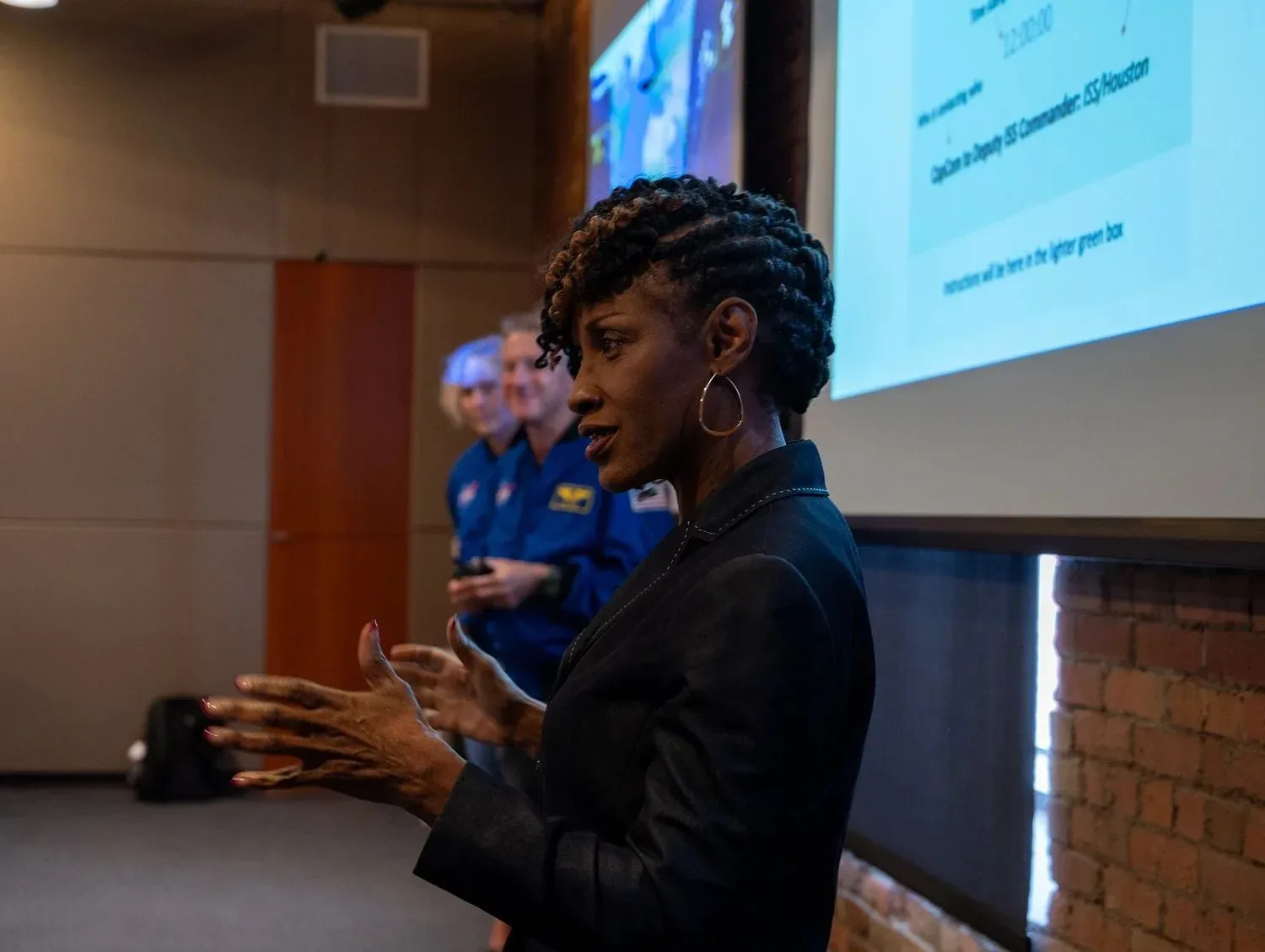
Photograph: Immersive Leaders programme photography — all rights reserved by Immersive Leaders by ISSET
Your agenda looks balanced on paper, yet the opening discussion overruns and everything afterwards becomes a negotiation with the clock. The problem is rarely solved by asking everyone to speak faster. Good timing starts with the kind of work each session requires and the transitions that make that work possible.
Allocate time according to the decision load
A session involving uncertainty, disagreement and a consequential choice needs more space than an information update. Count the work hidden inside the heading: understanding the evidence, hearing alternatives, testing implications and recording a decision. If those stages cannot fit, reduce the scope rather than relying on an unusually efficient conversation.
Ask the decision owner what must happen live. Move straightforward reading and factual updates into preparation where appropriate, while ensuring participants can access the material. Preparation is not a licence to flood inboxes. Send only what the discussion genuinely depends on and identify the questions readers should consider.
Build the running order around outputs rather than speakers. A sequence of presentations may be easy to schedule but difficult to use. Put the people and evidence needed for a choice together, then allow enough time to make the choice or state why it remains unresolved.
Write transitions into the facilitator's plan
An agenda often accounts for sessions but not the movement between them. People need to save notes, finish a thought, change rooms, find equipment or understand a new task. Those transitions consume real attention as well as time. Ignoring them creates a plan that begins falling behind almost immediately.
Script the essential handover: what has been established, what happens next and why the next activity matters. Keep instructions visible while people work. Repeated explanations are often a sign that the task was introduced vaguely, not that participants are unwilling to listen.
- State the purpose and expected output before explaining the mechanics.
- Tell participants what material or decision carries forward.
- Confirm when and how the group will reconvene.
Check practical requirements with the venue and delivery team. A room reset that looks trivial on a planning document may require equipment, staff or access that is not available when the previous session finishes.
Protect breaks from becoming hidden working sessions
A break needs to allow for the venue, the group and access requirements. If people spend the entire interval reaching facilities or queuing for refreshments, it has not provided much recovery. Plan around the actual environment rather than a standard template copied from a previous event.
End the session clearly before releasing the group. State what has been captured and what question will follow. An unresolved discussion will otherwise continue around the coffee station, potentially excluding people who need quiet, facilities or a private conversation. Do not allow substantive decisions to migrate there unnoticed.
Keep facilitator questions and sponsor announcements out of protected breaks wherever possible. If an urgent matter needs attention, acknowledge the change and adjust the plan. Calling it a break while continuing to issue instructions gives participants neither useful working time nor genuine recovery.
Change the work when attention changes
The period after lunch is a poor place to rely on passive listening. Use structured application, paired examination of a real problem or a practical rehearsal. The aim is not to entertain people awake. It is to give them a task requiring participation and a visible contribution.
Avoid assuming that movement is accessible or desirable for everyone. A change in cognitive demand can work without a physical game. Silent analysis followed by a focused comparison may produce more engagement than an energetic activity with no connection to the purpose.
Watch for diminishing returns in any period of the day. Repeated arguments, increasingly vague contributions and confusion about the question can signal the need to pause. They can also signal an unresolved authority issue. Before adding a break, check whether the group knows what it is being asked to decide.
Diagnose overruns before cutting the debrief
When a session slips, identify why. Is the work more complex than expected, has a relevant disagreement emerged or has the conversation wandered away from the objective? Different causes need different responses. Automatically removing reflection time preserves the activity while sacrificing the learning it was supposed to create.
Offer the group an explicit choice where appropriate. It can narrow the question, defer an item with ownership or spend longer on an issue while accepting what will be lost elsewhere. The facilitator should recommend a route, not merely announce that time has run out.
- Preserve time needed for safety, access and a proper close.
- Defer information sharing before removing consequential discussion.
- Record any displaced item with an owner and a next step.
Do not repeatedly promise to catch up later. A schedule cannot recover through optimism alone, and participants quickly stop trusting timings that bear no relationship to what happens.
Close before departures decide the ending
Plan the final working session around decisions, ownership and unresolved questions. People should be able to check the record while the relevant colleagues are still present. A hurried request for commitments as taxis arrive produces weak agreements and uneven participation.
End with a concise account of what changed and what will happen next. Tell the group where the decision record will live and when it will be reviewed. Good facilitation does not mean every session ends exactly as originally drawn. It means that changes to timing are deliberate, visible and made in service of the work.
Bring this to your team
We run NASA-style simulations, astronaut keynotes and leadership expeditions for organisations that need their leaders to make good calls under pressure.
Book a Call