Team Performance · 18 June 2026 · 5 min read
The Pre-Mortem: How to Argue With a Decision Before You Make It
Use a pre-mortem to test a decision before commitment: surface plausible failures, challenge assumptions and turn concerns into safeguards and review points.
Written by Sarah Murray
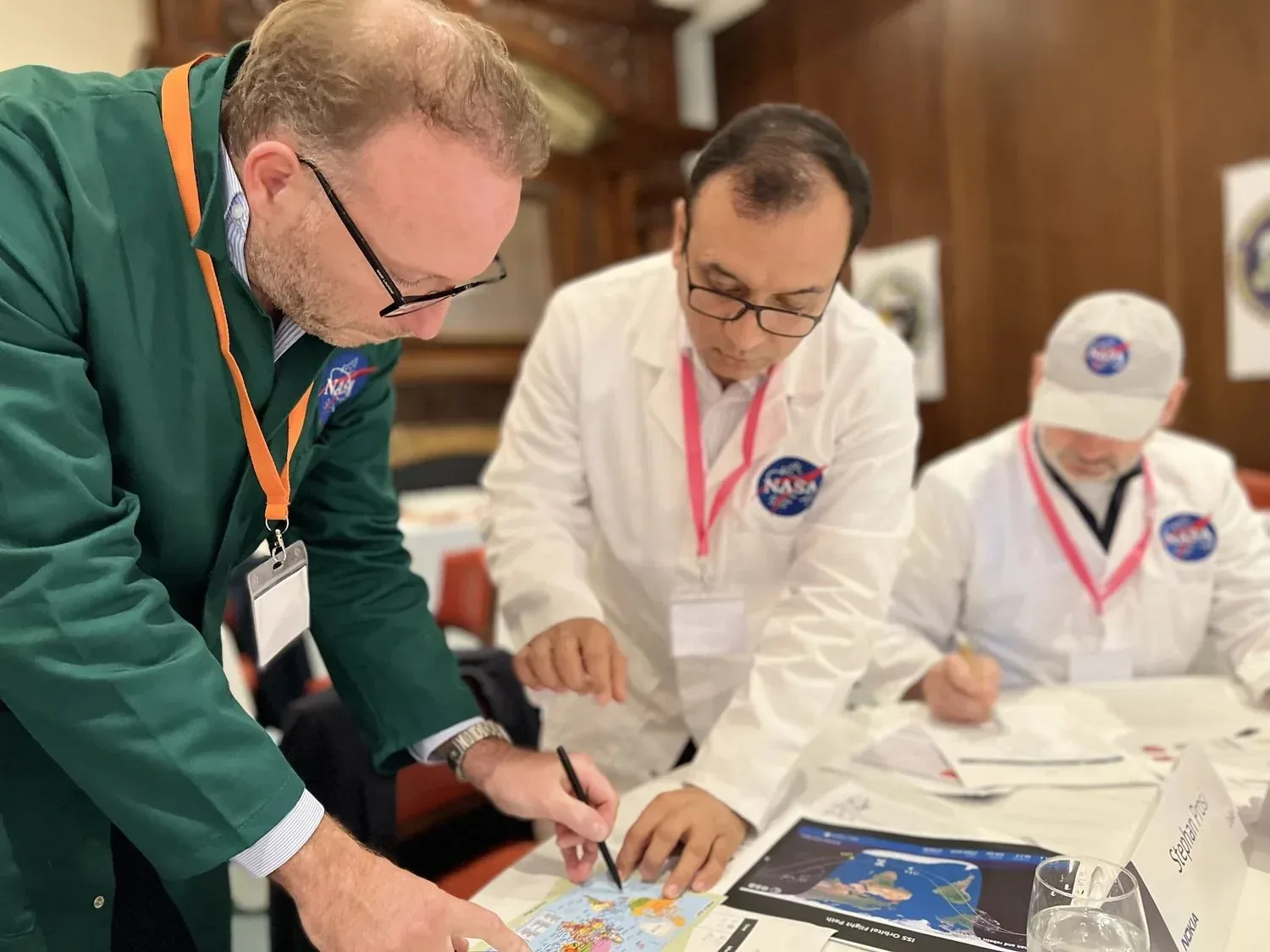
Photograph: Immersive Leaders programme photography — all rights reserved by Immersive Leaders by ISSET
The proposal is nearly ready. The sponsor is enthusiastic, the timetable is tight and nobody wants to be the person who reopens the discussion. This is a useful moment for a pre-mortem: a structured exercise in imagining that the plan has failed and asking how that might have happened.
The purpose is not to prove the proposal wrong or create a longer risk register. It is to make weaknesses discussable before commitment becomes harder to reverse. Used well, a pre-mortem turns general unease into specific questions, safeguards and decisions about whether the plan is ready.
Choose a decision that is still open
Run the exercise while the team can still change something important. If contracts are signed and delivery commitments are fixed, describe honestly what remains adjustable. Inviting colleagues to challenge a supposedly open decision that has already been made can undermine the very candour the exercise needs.
Define the proposal and the intended result in plain language. Include the main assumptions, constraints and dependencies. Participants need a common starting point, not a complete archive. If they cannot explain what success would look like, clarify that before asking them to imagine failure.
Choose an appropriate time horizon. Failure after the first week may have different causes from failure after a year. Pick a point that matches the decision and explain the kind of disappointing outcome you want to examine. Avoid making the hypothetical so catastrophic that ordinary, plausible problems disappear from view.
Let people think independently first
Give participants quiet time to write possible reasons the plan did not work. Ask for a causal explanation rather than a label. A note saying communication failed is too broad. A note saying the receiving team did not learn about a changed requirement before scheduling work gives the group something to inspect.
Independent writing helps keep the first confident speaker from setting the whole agenda. Provide another way to contribute where needed, including accessible formats or time to prepare. The exercise should not reward whoever produces the quickest objection in front of the group.
Ask people to consider their own contribution as well as external obstacles. A team can readily imagine suppliers, customers or regulators behaving inconveniently. It should also examine whether its own workload estimates, incentives, handovers or reluctance to stop work could create the outcome it is trying to avoid.
Surface risks without defending the plan immediately
Collect ideas before debating each one. If the sponsor answers every concern as it appears, later contributors may conclude that the real task is to defend the proposal. Record the concern accurately, ask a clarifying question if necessary and return to evaluation after the range is visible.
Group related concerns, but preserve important distinctions. Several notes about capacity might concern different constraints: specialist availability, management attention or time required from another department. Combining them into one broad heading can make the list tidy while hiding the decisions required to address it.
Separate a plausible pathway from a vivid story. Ask what would need to be true for the failure to occur, what evidence exists now and which assumptions remain untested. The exercise produces possibilities, not predictions. Do not give an imaginative scenario the status of a forecast simply because it sounds convincing.
Decide which concerns deserve action
Prioritise risks according to potential consequence, available evidence and the team's ability to intervene. Precise scoring is not always justified. If probabilities are uncertain, say so. A reasoned comparison can be more useful than numbers that imply knowledge the group does not have.
Look for shared dependencies. Several apparently separate problems may all rely on one person's availability or one unconfirmed approval. Addressing that dependency may be more useful than adding individual contingencies to every line. Ask which assumption, if wrong, would invalidate the proposal rather than merely inconvenience delivery.
- Which concern requires more evidence before approval?
- Which can be reduced by changing the plan now?
- Which needs a contingency or an early warning signal?
- Which risk is being accepted, and by whom?
Check for risks outside the team's authority or competence. A pre-mortem does not replace legal advice, safety assessment or required governance. Route specialist questions appropriately and avoid treating discussion in the room as approval to proceed with something that needs formal review.
Convert the exercise into a better decision
For each priority concern, record an action, owner and date. Specify the change you expect to see. Asking someone to monitor stakeholder engagement is vague; asking them to confirm a named dependency before the next approval point is more usable. Keep the record connected to the proposal itself.
State the resulting decision explicitly. The group may proceed with safeguards, defer for evidence, revise the approach or stop. Do not allow an energetic risk discussion to end with the original plan quietly continuing by default. The value lies in how the reasoning changes the commitment.
Agree review triggers for risks that remain. Identify observable changes that would justify pausing or reconsidering the work. Without triggers, an accepted uncertainty can become something nobody feels responsible for watching. Name who will notice and who has authority to respond.
Keep the exercise proportionate
Use a bounded session with the people who understand the work and those affected by its dependencies. A small decision may need only a short written exercise. A consequential commitment may warrant more preparation and specialist input. The method should sharpen judgement, not become a ritual attached to every minor choice.
At the next decision meeting, take one central assumption and complete this sentence: the plan would fail if this proved wrong. Then ask what evidence you need, what safeguard is possible and who will act. That is enough to begin arguing with the decision while there is still time to improve it.
Bring this to your team
We run NASA-style simulations, astronaut keynotes and leadership expeditions for organisations that need their leaders to make good calls under pressure.
Book a Call