Offsites & Simulations · 12 March 2026 · 6 min read
Team Offsite Icebreakers That Do Not Make Grown Adults Wince
Choose team offsite icebreakers that work by connecting introductions to real work, allowing people to pass and avoiding forced performance or disclosure.
Written by Sarah Murray

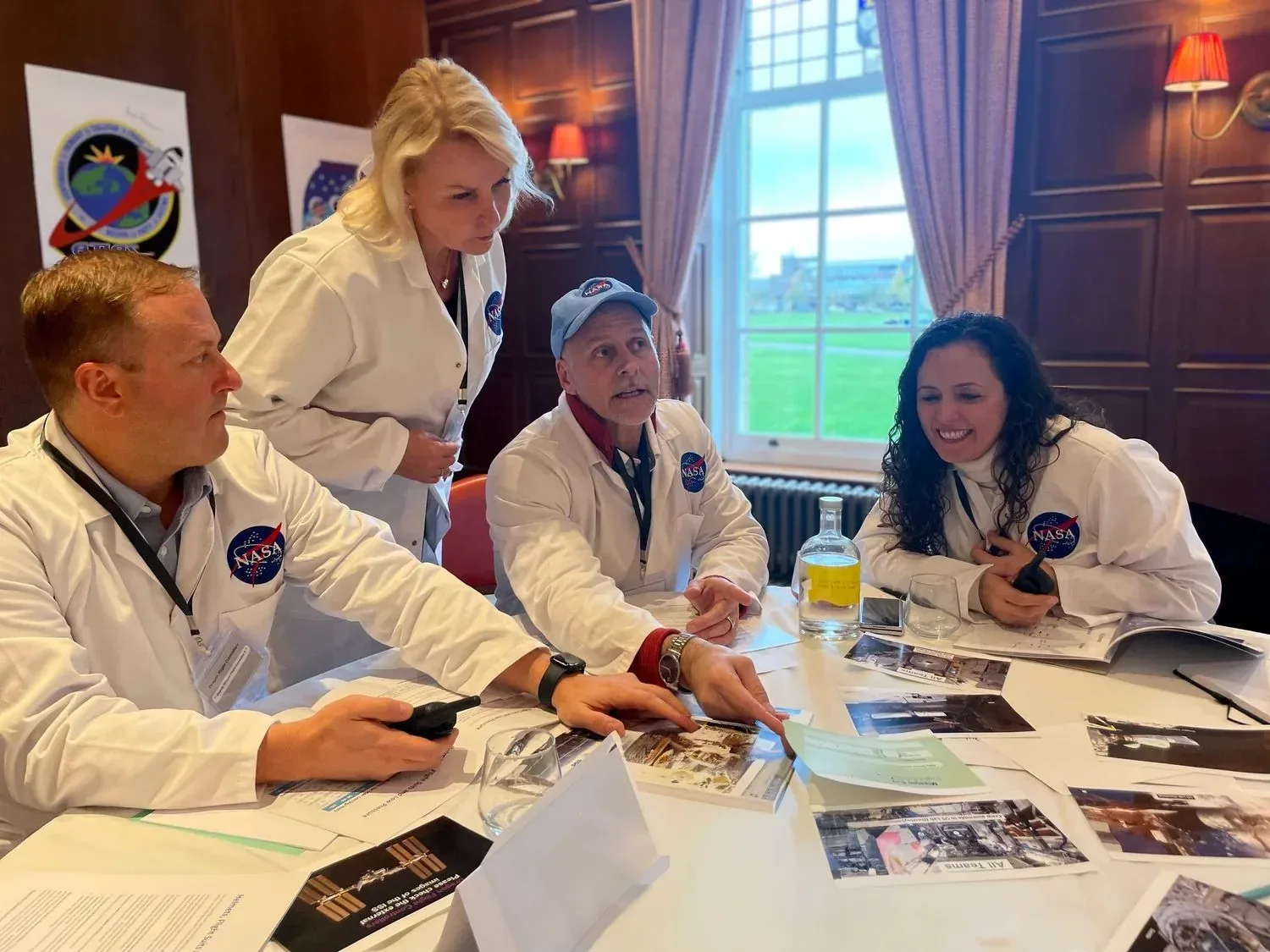
Photograph: Immersive Leaders programme photography — all rights reserved by Immersive Leaders by ISSET
The offsite has barely started and someone is already asking colleagues to perform enthusiasm in front of strangers. An opening activity should help people contribute, not create a social obstacle before the useful work begins. Choose it by the conversation you need next, rather than by whether the instructions promise instant energy.
Give the opening a specific job
Decide what participants need before the main discussion. They may need to learn each other's responsibilities, understand different perspectives or practise contributing without interruption. These are different jobs and call for different openings. A familiar leadership team reviewing a difficult decision does not need the same introduction as colleagues who have never worked together.
Link the activity to the purpose of the day. Ask people what they need colleagues to understand about their role, or which question they hope the offsite will resolve. Keep instructions plain and explain how the responses will inform the next session. An activity feels less artificial when people can see its use. If you cannot describe that use without referring vaguely to bonding, reconsider whether the activity belongs in the agenda.
Use a work-focused introduction for unfamiliar groups
Invite participants to discuss their role, a dependency on another team and something they can help colleagues understand. Where the group is unfamiliar, a paired conversation can make the first contribution less exposed than speaking immediately to the whole room. Ask permission before inviting someone to summarise their partner's comments, and keep personal material out of that summary unless explicitly agreed.
Do not assume everyone wants a playful identity or an unusual fact attached to their name. Those prompts can be harmless in some groups, but they are not automatically inclusive. A practical introduction gives participants useful information and a reason to speak again later. It also helps the facilitator notice language that means different things across departments before that ambiguity complicates the main discussion.
- Explain what your team is responsible for and where it relies on others.
- Name a work question you would value another perspective on.
- Offer an area of experience that may be useful during the offsite.
Surface expectations without collecting a wall of wishes
For a group that already knows one another, ask what would make the day worthwhile and what could prevent useful work. Give people an opportunity to think before discussing responses. This reduces the chance that an early confident contribution becomes everyone else's answer. Offer a written route where appropriate, with accessible alternatives for those who need them.
Sort the responses into what the offsite can address, what needs clarification and what sits outside its remit. Do not gather concerns ceremonially and then ignore them. Equally, avoid promising that every expectation will be met. The useful outcome is a realistic agreement about the work ahead. If participants expect a strategic decision but the sponsor only intends consultation, the opening has uncovered something important enough to resolve before proceeding.
Let a small work example reveal perspectives
A short, low-stakes example related to the day's purpose can create a better opening than a competitive game. Present an ordinary coordination problem and ask what information people would want before deciding. Different questions reveal different responsibilities without requiring participants to defend their own team's recent performance. Choose an example that does not depend on specialist knowledge or conceal a preferred answer.
Debrief the variety of perspectives rather than announcing a winner. Who noticed a dependency? Who asked about the customer consequence? What did the group assume without checking? Keep the discussion proportionate. The opening should make the next session easier, not expand into an elaborate simulation that consumes the attention and time intended for the actual offsite objectives.
Remove coercion disguised as participation
Allow people to pass, contribute in writing or take a less exposed role where appropriate. Explain those options normally rather than treating them as exceptions for difficult participants. Accessibility includes the demands of hearing, movement, language, concentration and social interaction. Check the format in advance rather than assuming that an activity is inclusive because it needs no equipment.
Avoid forced disclosure, unexpected physical contact and exercises that invite colleagues to diagnose one another's personalities. A senior leader may experience an activity as relaxed while a new colleague experiences the same request as compulsory. Facilitation needs to account for that difference in power.
- Can someone participate meaningfully without sharing personal information?
- Does the format require physical or verbal performance unrelated to the work?
- Is passing genuinely acceptable when a senior sponsor is watching?
Carry something useful into the next session
Close the opening by summarising what the group has learned that matters for the agenda. Refer to a shared dependency, an unresolved expectation or a useful difference in perspective. Make the transition explicit so the activity does not feel like a warm-up exercise discarded as soon as the serious work begins.
Watch the first substantive conversation for evidence that the opening helped. Are more voices contributing? Do people understand why they are there? Has a misunderstanding been resolved before it distorted the discussion? You do not need everyone to describe the activity as fun. A successful icebreaker often feels unremarkable because it removes friction rather than creating a memorable performance. The room is ready to work, and nobody has had to reveal a secret or pretend to enjoy being put on the spot.
Bring this to your team
We run NASA-style simulations, astronaut keynotes and leadership expeditions for organisations that need their leaders to make good calls under pressure.
Book a Call